
Investing for Complete Beginners: How to Start With Confidence
Never invested before? Here's a clear, plain-English introduction to what investing actually is, why it matters, and exactly how to take your first step.

If the word "investing" makes you picture a trading floor and men shouting numbers, you're not alone, and that image is exactly why so many women feel locked out of something that's actually far more accessible than it looks.
Investing means putting your money into assets, like shares in companies, through funds, that are expected to grow in value over time, so your money works for you instead of sitting still. For most beginners, starting with a small, regular contribution into a diversified fund is far more effective than trying to pick individual "winning" stocks.
What investing actually means
At its simplest, investing means using your money to buy a small piece of something, usually a share in a company, or a fund made up of many companies, with the expectation that it grows in value over time. You're not gambling on a single outcome; you're participating in the long-term growth of real businesses and economies.
Why investing matters (and why saving alone isn't enough)
Cash savings are essential for safety, but they rarely grow faster than inflation over the long term. Investing is how money genuinely grows over decades, largely thanks to compound interest, your returns generating their own returns over time. We break this down fully in Compound Interest Explained.
Example
£200 invested monthly for 25 years, growing at an average annual return of 7%, could grow to roughly £160,000, compared to around £60,000 if the same amount were simply saved with no growth at all. The difference isn't magic; it's time and consistent growth compounding together.
The building blocks you actually need to know
- Shares (stocks): A small ownership piece of a single company.
- Funds: A collection of many shares bundled together, spreading your risk across dozens or hundreds of companies at once.
- Index funds and ETFs: Funds designed to track a whole market (like the FTSE 100 or S&P 500) rather than betting on individual companies. We compare these directly in Stocks vs ETFs vs Index Funds.
- Risk and time horizon: Generally, the longer you can leave money invested, the more short-term ups and downs you can comfortably ride out.
How to actually take your first step
- Make sure your foundation is solid first, a working budget and at least a starter emergency fund, covered in The Complete Emergency Fund Guide.
- Choose a regulated investment platform appropriate for your country, and check any tax-efficient account options available to you (such as an ISA in the UK).
- Start with a diversified, low-cost index fund rather than trying to pick individual company stocks.
- Set up a small, regular monthly contribution, consistency matters far more than the size of any single contribution.
- Leave it alone. Investing rewards patience; checking daily and reacting to every dip tends to hurt returns, not help them.
Common beginner mistakes
| Mistake | Why it hurts |
|---|---|
| Trying to "time the market" | Even professional investors struggle to consistently predict short-term market movements. |
| Picking individual stocks based on tips | Concentrates risk in a single company instead of spreading it across many. |
| Investing money you'll need within a year or two | Short time horizons don't allow enough time to recover from a downturn. |
| Panic-selling during a market dip | Locks in a loss that would likely have recovered if left alone. |
Recommended reading
Disclosure: Some of the links below are affiliate links. If you buy through them I may earn a small commission, at no extra cost to you. I only ever recommend things I genuinely rate.
If you want to go deeper, these two books explain the mindset and the mechanics of investing in plain language:
- The Psychology of Money by Morgan Housel: why your behaviour, not your maths, drives most of your financial outcomes.
- Rich Dad Poor Dad by Robert Kiyosaki: a classic, accessible introduction to how assets and income work.
Key takeaways
- Investing means buying assets expected to grow over time, it's not gambling, and it's not only for people who already have money.
- Compound interest is the main reason investing beats saving alone over long time horizons.
- Diversified, low-cost index funds are a sensible starting point for most beginners.
- Build your emergency fund first, then invest consistently and leave it alone.
Once you understand the basics, it's worth getting comfortable with exactly how compound interest works, because it's the engine behind almost everything that makes long-term investing worthwhile.
The Personal Finance Guide
The complete, step-by-step system for understanding your money.
A calm, step-by-step walkthrough of exactly how to organise your money, from your first budget to your first investment, explained simply and without the jargon.
Related articles
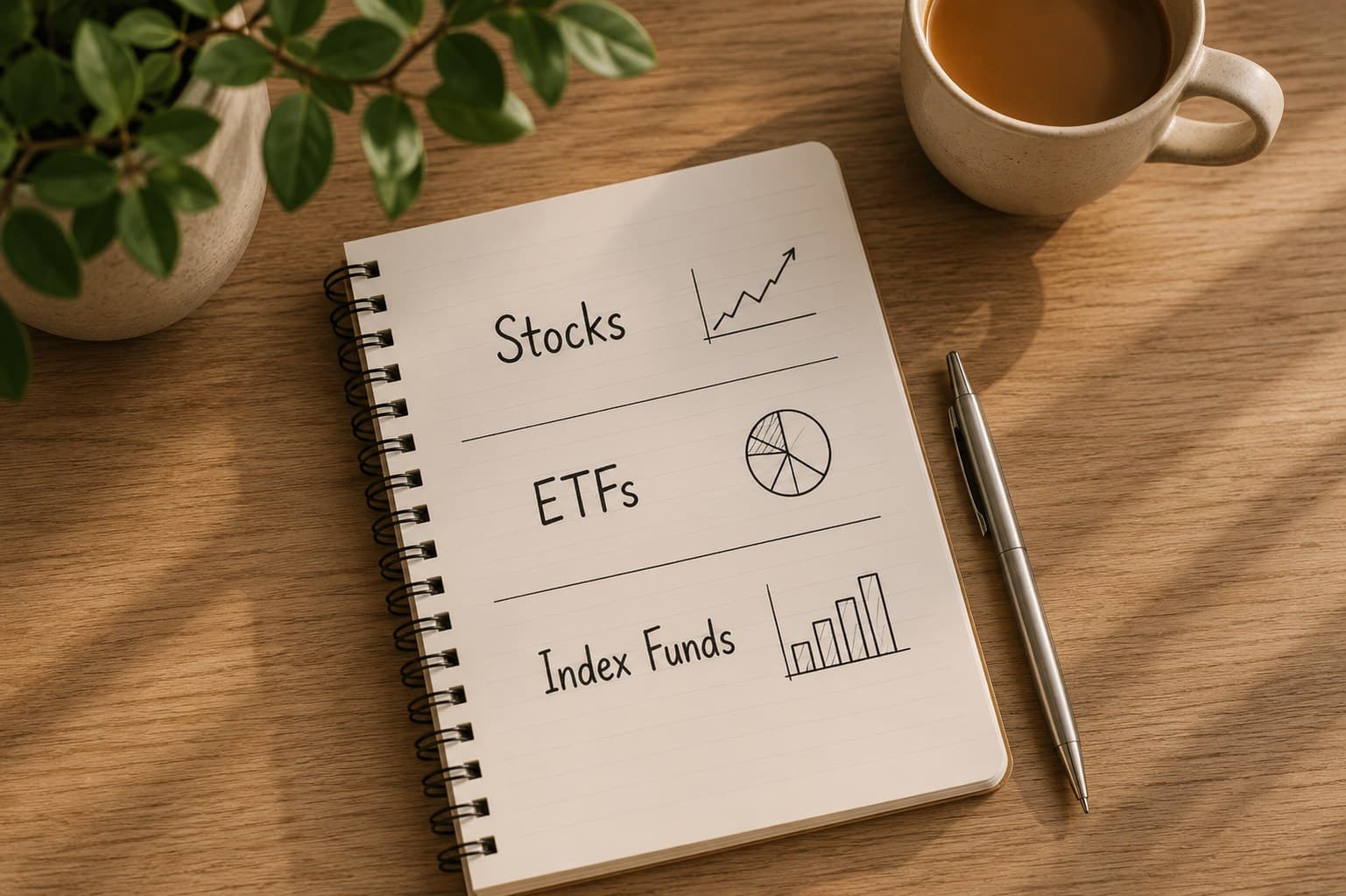
Stocks vs ETFs vs Index Funds: What's the Difference?
Stocks, ETFs and index funds get used interchangeably, but they're not the same thing. Here's a clear breakdown of each, and how they usually work together.
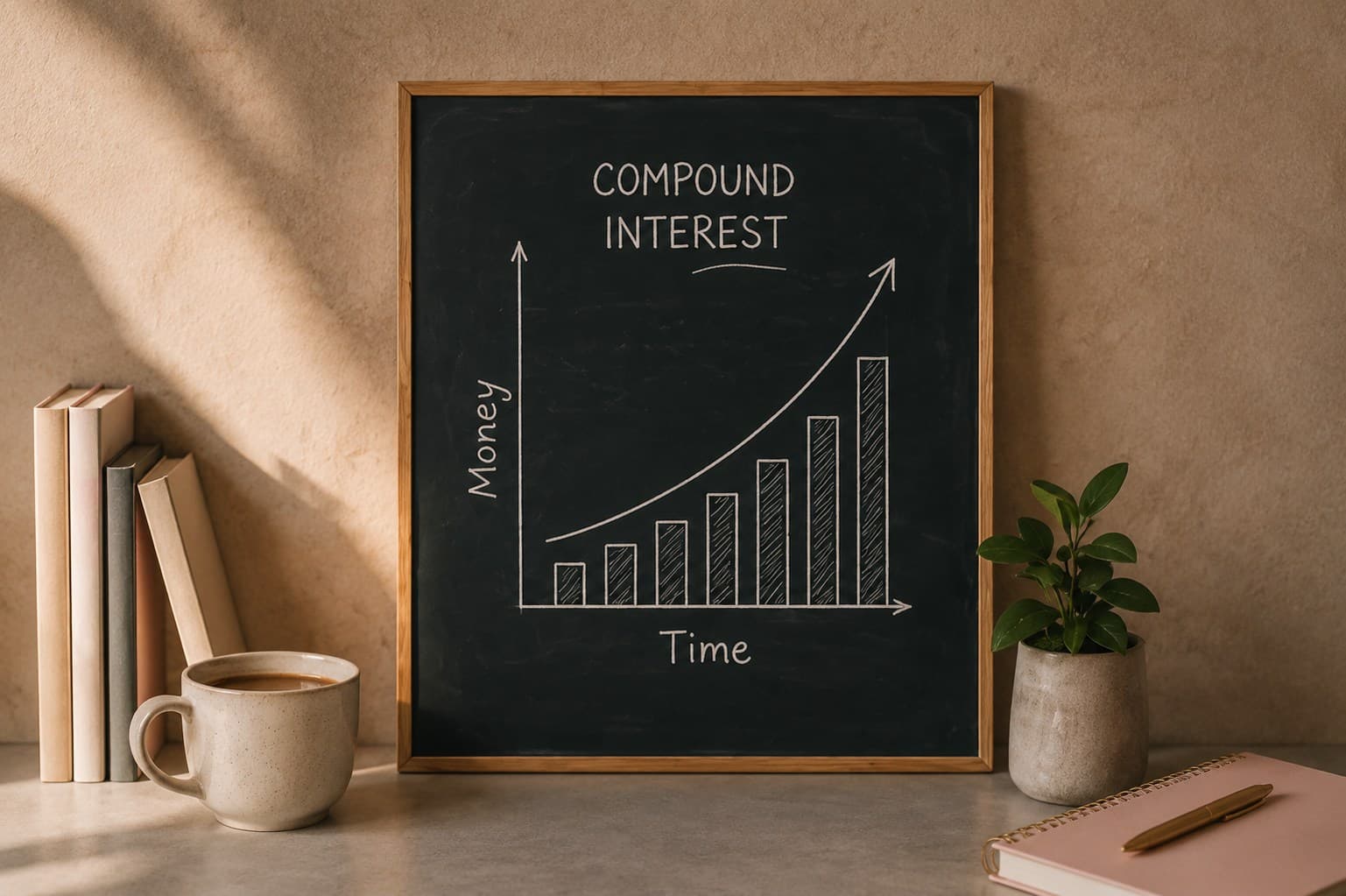
Compound Interest Explained (With Real Examples)
Compound interest is often called the eighth wonder of the world for a reason. Here's a clear explanation of how it actually works, with real numbers.

What Financial Independence Actually Means (And How to Get There)
Financial independence isn't one magic number or an early retirement fantasy. Here's what it actually means, and a realistic path toward it.